
*Notice: This book review contains spoilers.
Revelation of the Magi: The Lost Tale of the Wise Men’s Journey to Bethlehem
The birth of Jesus the Christ as messiah to the world was foretold by prophecy and the result of divine intervention. The confession of faith and belief in Christ as messiah is the primary tenet of Christianity. In general, other monotheistic religions such as Judaism and Islam recognize Christ as a prophet, but do not accept him as the messiah. Accordingly, his birth is of great significance to Christendom and has also been commercially popular in several cultures, especially those in the Western hemisphere.
Often, during the Christmas season the Nativity scene can be found on wrapping paper, church lawns, and miniature versions in homes. The Nativity features: Mary, Joseph, baby Jesus in a manager, shepherds, sheep, and the three wise men. The scene is captivating and much is known about the main participants, but the Magi (the three wise men) are a bit more of a mystery.
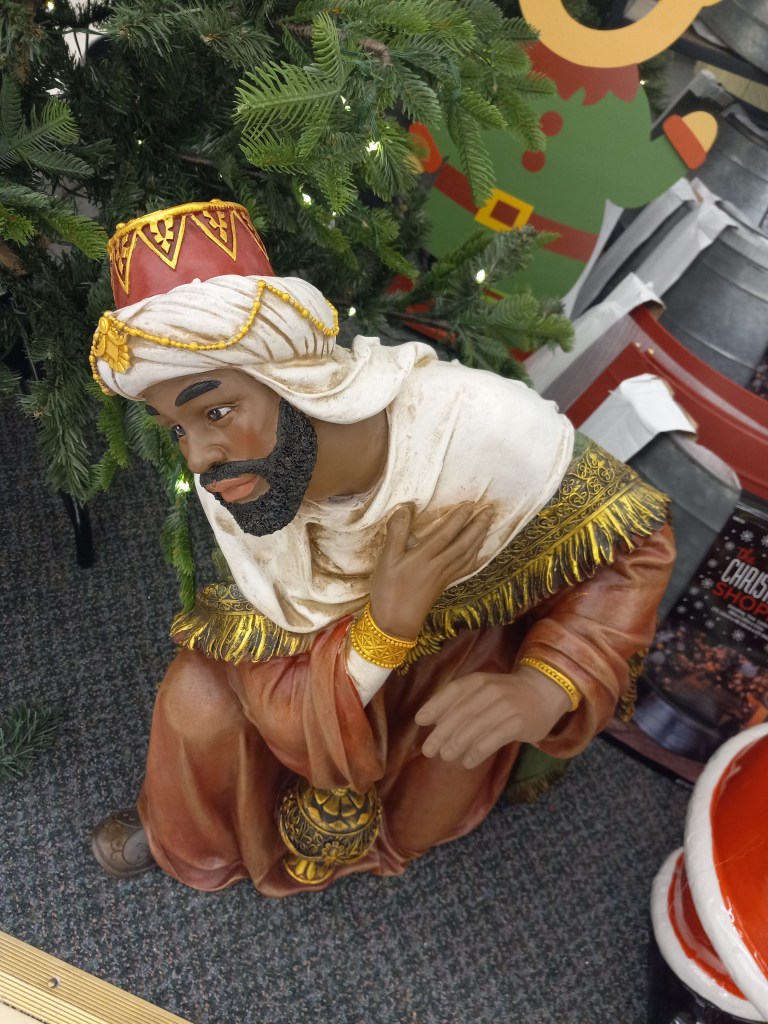
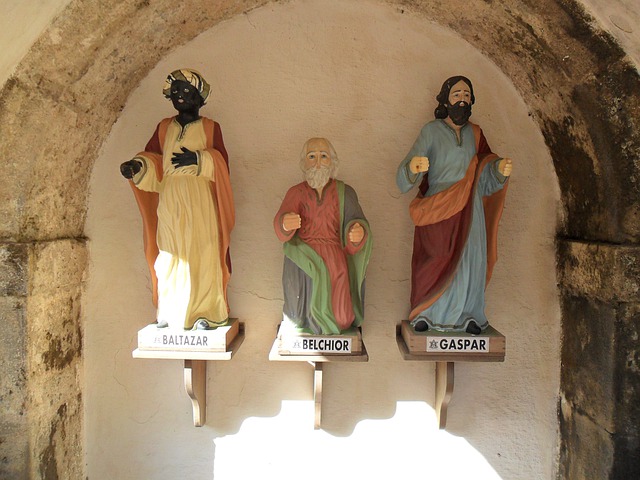
(I came across this Magi statute last Christmas at Hobby Lobby)
“The Lord in a dream warns the wise men not to return to King Herod.”
The Bible provides an account of the wise men in the New Testament Gospel of Matthew : “Now when Jesus was born in Bethlehem of Judaea in the days of Herod the king, behold, there came wise men from the east to Jerusalem” (see Matthew 2:1-12 KJV). As the verses continue the wise men state they have seen his star in the east and have come to worship the King of the Jews. They are summoned by King Herod and encouraged to report back to him when the child is found.
They find the Christ child in a house with his mother Mary and give gifts of gold, frankincense, and myrrh unto them. The Lord in a dream warns the wise men not to return to King Herod. They decide on a different travel route and depart for their homeland. This brief account of the wise men is amazing but questions linger about their identity, knowledge, and country.
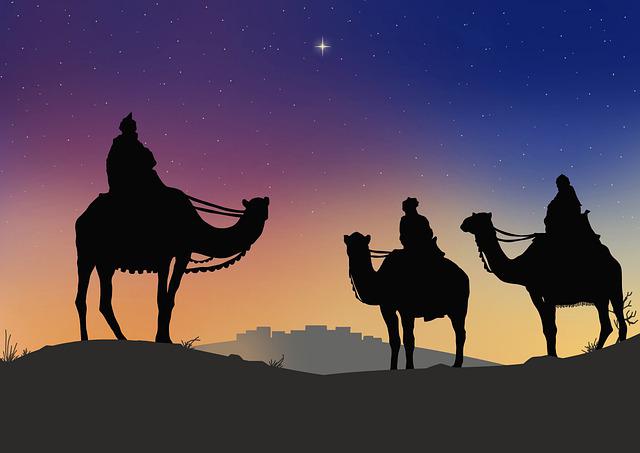
Brent Landau, a historian and theologian, provides potential answers about the Magi in his book: Revelation of the Magi: The Lost Tale of the Wise Men’s Journey to Bethlehem (2010, 375 pages, kindle edition). This text is considered the first English translation of an ancient Syriac manuscript written during the 2nd-3rd century after the birth of Christ about the Magi. It’s an early Christian apocryphal writing first housed in a monastery in Turkey, then it moved to Egypt, and from there to Rome. Today, the manuscript is kept in the Vatican.1 For the purpose of skepticism, examine the term Apocrypha as defined by encyclopedia Britannica.com:
Apocrypha (from the Greek apokryptein, “to hide away”), in biblical literature, works outside an accepted canon of scripture. The history of the term’s usage indicates that it referred to a body of esoteric writings that were at first prized, later tolerated, and finally excluded. In its broadest sense apocrypha has come to mean any writings of dubious authority.2
In the book, this apocryphal manuscript reveals the Magi are descendants of Seth (Adam and Eve’s third son) and are mystics3 who live in the land of Shir.4 For generations they have passed on the teaching of the “star” prophecy from father to son.5 They are called Magi because in their mother tongue it means “they pray in silence.”6 The Magi describe their prayer life in the following quote:
And we knelt on our knees and stretched forth our hands to heaven, and we prayed and worshiped in silence, without a sound to the Father of that heavenly majesty that is ineffable and infinite forever.7
“The Magi were guardians of this ancient “star” prophecy and were being used as instruments of faith.”
While en route to Bethlehem others saw them frequently observe the heavens and mistakenly took them for astrologers.8 Of which they were not.9 The Magi were guardians of this ancient “star” prophecy and were being used as instruments of faith. The author suggests the manuscript was suppressed due to controversial topics found within the writings, namely the polymorphism of Christ and religious pluralism. The Magi claim Christ appeared to them prior to his birth but did not identity himself (polymorphism)10 and an experience of Christ may super-cede being a Christian (religious pluralism).11 The manuscript concludes later in time, with the Magi and their brethren as recipients of the Eucharist12 and baptism13 and as preachers of the Gospel.14
I found this book very interesting and the material is presented in an approachable manner that allows one to easily follow along. The Magi provide a lot of food for thought from both the biblical and apocryphal perspective. Lastly, consider these two biblical scriptures: 1.) “And being warned of God in a dream that they [wise men] should not return to Herod, they departed into their own country another way” (see Matthew 2:12 KJV). 2.) “And we know that all things work together for good to them that love God, to them who are called according to his purpose” (see Romans 8:28 KJV). Merry Christmas!
References:
(2.) “Apocrypha.” Britannica.com. Accessed December 24, 2019. https://www.britannica.com/topic/apocrypha
Landau, Brent. Revelation of the Magi: The Lost Tale of the Wise Men’s Journey to Bethlehem. HarperOne. Kindle Edition (2010).
Specific Citations:
1. Landau, 171
3. Landau, 75
4. Landau, 71
5. Landau, 442-447
6. Landau, 71
7. Landau, 438-442
8. Landau, 249
9. Landau, 75
10. Landau, 589
11. Landau, 1153-1157
12. Landau, 942-944
13. Landau, 1325-1327
14. Landau, 963-967
*Notice: The article: “HOLIDAY BONUS BOOK REVIEW: REVELATION OF THE MAGI” was first published in December 2019. To view click here.
💖For Additional Reading
ABC News: Rediscovered Ancient Text Tells A Different Three Wise Men Tale (2010)
https://abcnews.go.com/Travel/wise-men-ancient-text-differs-bible-tale-magi/story?id=12460820
Table Talk Magazine: Should Protestants Read the Apocrypha? (2018)
Video
John Stonecypher on YouTube
2006

Discover more from Sankofa Newsletter
Subscribe to get the latest posts sent to your email.
 Sankofa Newsletter