Culture & News
What is Race?
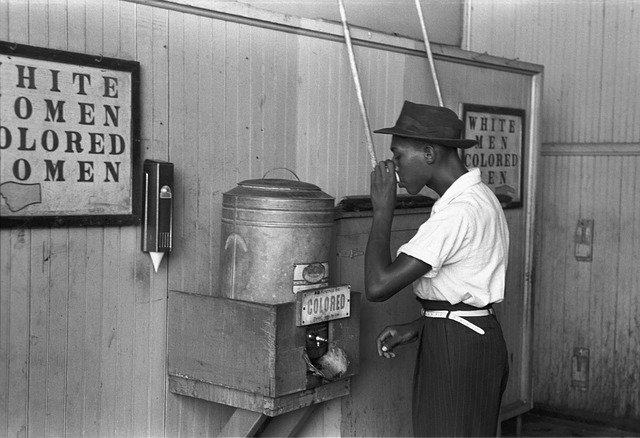
There are those who believe that race is a social construct. And while this belief may be based in truth, the complexity of race is much deeper. It has several components: social, political, historical, cultural, and involves economics. In other words, a “social” construct that has real life consequences and rewards based on one’s hue. The Transatlantic Slave Trade (maritime approx. 1482 C.E.– 1850 C.E.) was a war strategy, that used the ruse of racism, to justify corrupt intentions to conquer, colonize, and plunder natural resources and humans for global distribution. The use of racism (also known as White Supremacy) as a system, gives those with the same skin color of the dominant power group, automatic benefits of cultural capital and social rewards. However, this association to the dominant power group, does not make these individuals immune from personal hardships, nor does it mean they all will engage in acts of discrimination. Although, it is recognized others will.
The plot thickens when we look back at race in antiquity. Be mindful that dark skin color, while a physical characteristic, did not necessarily carry the same stereotypical contention found in modern times. Hence, race has roots as a modern war strategy based on skin color, combined with enforced historical amnesia and dehumanization. Our contemporary use of race presents even more dichotomies for analysis. Let’s start with genotype (genetics) versus phenotype (physical characteristics). For example, the biracial offspring of a White parent and Black parent will inherit the genetics of both parents. And for the sake of argument, let’s say the offspring may present with a phenotype that appears as White, Black, or a form of racial ambiguity. Of course, this biracial phenotype has various degrees of expression in an individual. Then add social, political, historical, economic, and cultural elements found within a society. The complexity gets deeper.
At the Appalachian foothills of Ohio, there lies a community composed of biracial and multiracial people in a small area of town known as East Jackson. They are the descendants of White, Black, and Native American groups that have intermarried for 200 years. Although, many have a phenotype that presents as White, several consider themselves as Black, both socially and culturally. The State of the Re:Union hosted by Al Letson interviewed the residents in their podcast: Pike County, Ohio: As Black as We Wish to Be (September 28th, 2012). It includes the opinions of two sisters, Carlota and Allison, in which one lives as Black and the other as White. There is an admitted rift between the sisters due to their different opinions on race and the racial bullying experienced by one sister in high school. Of note, the podcast states there were more “sundown” towns in the American North and the nearby town of Waverly, Ohio was considered one of them. A very interesting story that presents a “complex racial identity” for discussion.
Another interesting complex racial identity for analysis, is the use of the controversial Blood Quantum Test (a blood fraction) that determines the percentage of Native American ancestry within an individual. This blood test is required to meet certain tribal citizenship requirements. So, more racial complexity.
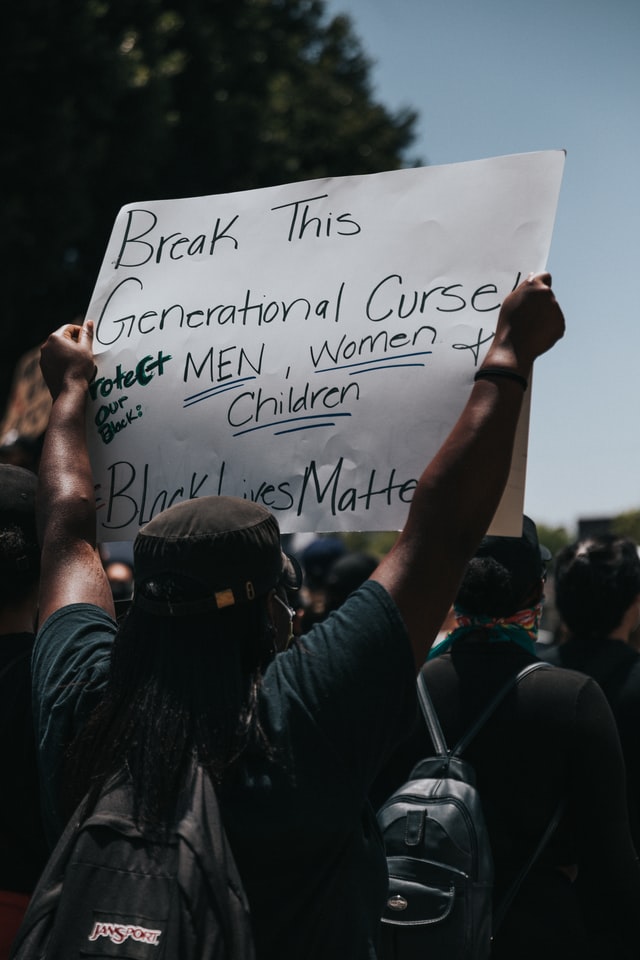
Finally, the African American population are the ancestral survivors of enslaved Africans. The history of dehumanization, miscegenation laws, and Jim Crow laws applied to this group, along with the unfortunate ongoing inequalities, provides a unique paradox for those who participate in racism. A sin of vanity or if you will, a generational curse.
Even this brief attempt to explain race does not do complete justice to its various intricacies. But at the minimum, it is a good place to start.
The Guardian: They Look White but say They’re Black: A Tiny Town in Ohio Wrestles with Race (2019)
https://www.theguardian.com/us-news/2019/jul/25/race-east-jackson-ohio-appalachia-white-black
PRX: State Of The RE:Union Podacast: Pike County, Ohio: As Black As We Wish To Be (2012)
https://exchange.prx.org/SOTRU
NPR: So What Exactly is Blood Quantum? (2018)
https://www.npr.org/sections/codeswitch/2018/02/09/583987261/so-what-exactly-is-blood-quantum
Art/Film/Literature News

Sometimes You Need A Little Dylema
Dylema is a brilliant spoken word artist whose poetic lyrics combined with a bit of jazzy music will make you smile. And think, deeply. One of her popular works: “What If a Black Girl Knew” is an inspirational and powerful tribute! Because sometimes you need a little Dylema.
The Session Berlin on YouTube
Business/Non-Profit News

Black Studies Program For Grades K-12
The New York Public School District has implemented a Black Studies Program for students in Grades K-12. The program will include instruction on early African civilizations, contributions of African Americans, and knowledge about the African Diaspora.
Book Review
Scientology From Islamic Perspective
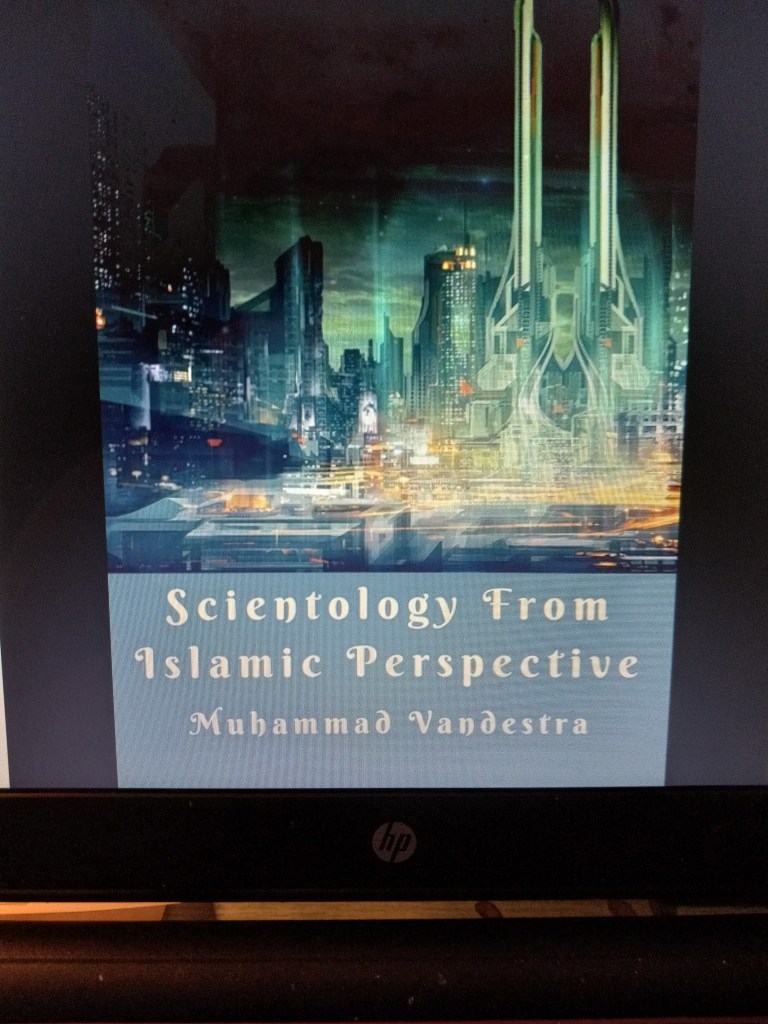
Muhammad Vandestra provides a comparative religion analysis in the book: Scientology From Islamic Perspective (24 pages, 2017, kindle edition). This short book provides a brief overview on the origin and philosophy of Scientology in comparison to Islam. The author states the motivation is not to “denigrate scientologists” and more so to provide “informed knowledge.” He asserts the Church of Scientology has allegations of criminal activity, apostates’ claims of cult practices, and FBI encounters. The author writes: “Social status, or wealth have no bearing on how much Islam a person is entitled to know, nor does the length of time a person has been Muslim” (kindle loc. 142).
The comparative religion analysis takes a brief detour into Christianity, which is a bit off task since Scientology does not claim this religious doctrine. However, the book itself is still a good general overview and contrast between Islam and Scientology.
I look forward to reading other works that delve deeper into the comparative religion aspects, particularly between Orthodox Islam and the Nation of Islam.
💖Purchase/Read Book Synopsis here
Harvard University: Ramadan Helps Bring Orthodox Muslims and Nation of Islam Followers Together (2000)
The Journal.ie: Senior Nation of Islam Minister Helps Launch Scientology in Ireland (2017)
https://www.thejournal.ie/scientology-nation-of-islam-3642816-Oct2017/
The Washington Post: U.S. Charges Scientology Conspiracy (1978)
CBC on YouTube
Video (4)
The Guardian on YouTube
Alexis Belon on YouTube
She Said He Said on YouTube
Ancestral Productions on YouTube



Discover more from Sankofa Newsletter
Subscribe to get the latest posts sent to your email.
 Sankofa Newsletter