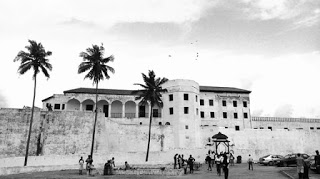
The word Sankofa originates from the Twi language of the Akan tribe of Ghana, West Africa. It means “go back and get it.” The Akan people believe the past and the future are eternally intertwined and any pursuit of knowledge must demonstrate this understanding.
The Sankofa Newsletter is a mini-guide to culture and news. A monthly publication that features four articles to inspire, enlighten, and stimulate intellectual curiosity. Get a free copy delivered to your email inbox today. Share, Like, Subscribe. Happy Reading! LaSheba Baker, Blogger
😊 Note: For email subscribers, you can click the blue title at the top “Edition” to connect directly to the web blog. This may provide a better copy to read.

The formal definition of the term Sankofa means: “it is not taboo to fetch what is at risk of being left behind” or more simply put: “go back and get it.” Mr. Curtis James Morrow (aka Kojo-Achampong) was disillusioned by the 1960s social-political climate in the United States. So, he undertook a Sankofa journey to the African continent to discover his ancestral roots. For eleven years (1965-1976) he lived in Ghana, Togo, and the Ivory Coast. In his book: My Sankofa (178 pages,1983, kindle edition) he provides an account of his experience. A U.S. Army veteran who served as a combat team rifleman (awarded two Purple Hearts) and now was working at the post office as a custodian. He gained some additional income from his natural ability as a gifted artist. One rainy day in 1965, he left New York for Accra, Ghana with limited funds and not really knowing anyone there.
Mr. Morrow arrived to the continent and learned to live as a Ghanaian by embracing their customs, cuisine, and traditions. As a foodie, I appreciate his food descriptions: fried plantains, black-eyed peas, palm wine, okra stew, fu-fu, and hot spicy porridge. He made friends (and girlfriends) along the way with the expatriate community and the indigenous population. Living in both the bustling city and the bush (rural area), he held various jobs, such as a jewelry craftsman, artist, and yam seller. He also was a resident witness to the coup d’etat of President Kwame Nkrumah and the political upheaval that consumed the city. There are some poignant moments in the book like when he felt comfortable to discuss his time as a combat soldier with others (which he rarely did). Also, a conversation regarding how African-Americans identify themselves (Afro, Black, or Negro) and he is told: “Even though they call themselves by all those other names, their souls still came from Africa; to deny that, is to deny one’s self” (kindle loc. 988). After living in Africa for over a decade, his longing for re-connection with family in America beckoned his return.
This memoir is an enjoyable read and provides scenes of everyday life and the unique experiences of one person’s journey. He writes in an engaging flowing manner that can be easily followed. There are some photographs of friends and him at different stages during the experience. I recommend this book for those planning a visit to the African continent or just to expand cultural awareness.
💖Purchase the book here: https://www.amazon.com/My-Sankofa-Curtis-James-Morrow-ebook/dp/B006OV0D6K
Video (9)
“Atlantic Slave Trade: Fallacy of Blacks Selling Blacks”
“Episode 3. Relocating Experience PT 2”
“Should Black Americans Leave America?”
“The Grapevine: Sh**Hole Countries S3EP17 (2/2)”
“U.S. Police Killing of Ugandan Immigrant Sparks Anger in Africa”
“Leave America for Good-Tourism Minister to Diaspora”
“Where Can I Buy African Food: Restaurants in Ghana”
“Amerikkka is still a Slave Plantation-Lets Escape to Build Africa?”



Discover more from Sankofa Newsletter
Subscribe to get the latest posts sent to your email.
 Sankofa Newsletter