“To gain knowledge for the future, demands wisdom of the past.”
💖Welcome to the Sankofa Newsletter Blog!
The word Sankofa originates from the Twi language of the Akan tribe of Ghana, West Africa. It means “go back and get it.” The Akan people believe the past and the future are eternally intertwined and any pursuit of knowledge must demonstrate this understanding.
The Sankofa Newsletter is a mini-guide to culture and news. A monthly publication that features four articles to inspire, enlighten, and stimulate intellectual curiosity. Get a free copy delivered to your email inbox today. Share, Like, Subscribe. Happy Reading! LaSheba Baker, Blogger
😊 Note: For email subscribers, you can click the blue title at the top “Edition” to connect directly to the web blog. This may provide a better copy to read.
💖Sankofa Newsletter
August 2020 Edition
Culture & News
The Green Pastures
Recently, I read the book Black Skin, White Masks (1967) by the brilliant Frantz Fanon who mentions the film: The Green Pastures (1936). He describes the author Mayotte Capécia’s impression of the film: “…But there is the film Green Pastures, where God and the angels are black, that gave the author a terrible shock: “How can God be conceived with Negro features? That’s not my idea of Paradise. But, after all, it’s only an American film” (page 34).1 This film was unknown to me and the idea of a vintage Hollywood depiction of an African-American heaven was so intriguing my reading was paused to search for the film. I had seen black angels as dolls and Christmas ornaments and tried to remember my earliest memory of a black heaven on film. The answer arose as the music video “I Ain’t Mad At Cha” by Tupac Shakur (1996). I found the film available for rental on Amazon and immediately watched it. Prepared to encounter the possibility of cruel stereotypes and propaganda, I had no idea what to expect.
This folktale film begins with the foreword: “God appears in many forms to those who believe in Him. Thousands of Negroes in the Deep South visualize God and Heaven in terms of people and things they know in their everyday life. The Green Pastures is an attempt to portray that humble, reverent conception.” The film centers around a Sunday school lesson in Louisiana, where inquisitive children ask insightful questions to the preacher who explains in cultural terms the kingdom of the Lord, angels, and the frailties of humankind. As a native Southerner there was recognition of some old colloquialisms and customs that have contemporary modes of kin. It’s a very enjoyable film that does not bombard the audience with offensive stereotypes, especially given the 1930s time period. But that does not mean they are completely absent either. Those who have watched old biblical-style films will feel a sense of familiarity with The Green Pastures. Overall, the film has a genuine spirit of dignity. Be sure to watch the short film clip at the end of this newsletter.
Black Then Discovering Our History: July 16, 1936: The Great Movie, Green Pastures, Premiered in New York (2019)
(1.) Fanon, Frantz. Black Skin, White Masks (p. 34). Grove Atlantic (1967). Kindle Edition.
Art/Film/Literature News
What Happens When You Break A Bone?
What Happens When You Break a Bone: Suzie Learns about Bones and Muscles (2020, 21 pages) is the second book by medical students Samantha Harris and Devon Scott with illustrations by Harriet Rodis. The character Suzie learns about broken bones in this story that includes a mini-anatomy lesson and nutrition facts. Also appreciate the career spotlight page at the end of the book. Cute series! It’s available as a free ebook here: https://www.millieandsuzie.com/
A neighborhood on the west side of Chicago will have a pop-up fresh food market in an area considered to be a food desert. After the George Floyd protests, local teens participated in “listening circles” and voiced concerns about a lack of fresh food options in the neighborhood. The result was the idea to replace a liquor store with a fresh food market. Their efforts have been joined by professional athletes and the market is due to open in August.
Good Black News: Teens in Chicago Work to Turn Liquor Store into a Pop-up Fresh Food Market
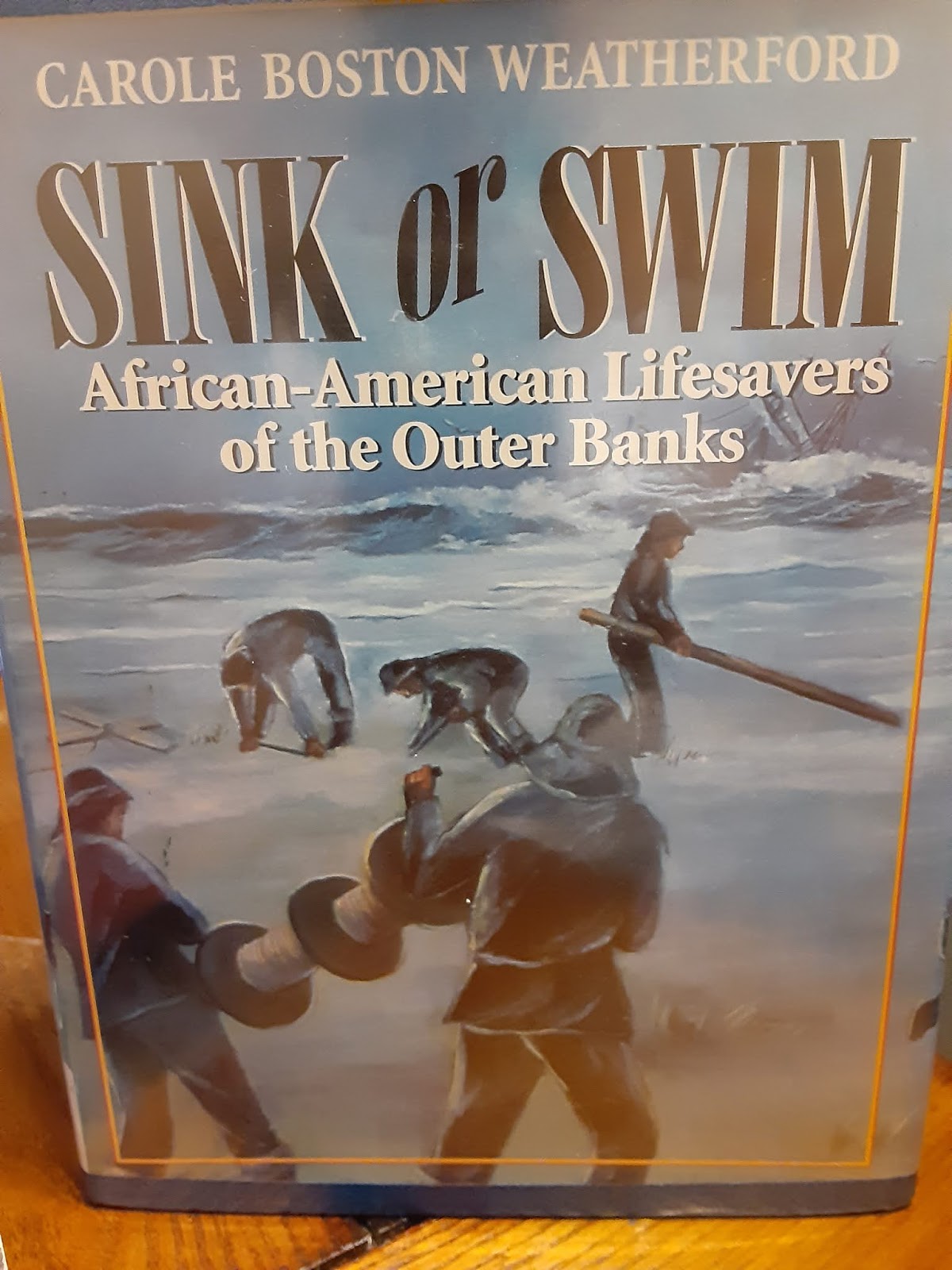
Richard Etheridge (1842-1900) was born into slavery, served in the Union Army and was promoted from Surfman to Keeper in the U.S. Lifesaving Service. He managed the all-black crew of Pea Island Station, North Carolina. Learn more about this lesser known piece of American history in the book: Sink or Swim: African-American Lifesavers of the Outer Banks by Carole Boston Weatherford (1999, 81 pages). The author, Weatherford writes: “Richard Etheridge and his crew had fought the stormy sea and won. But, unlike white lifesavers who were honored for less heroic rescues, the Pea Island crew received no medals for risking their lives…The crewmen became local legends. African-American boys on Roanoke Island dreamed of becoming lifesavers when they grew up” (p. 57-58). In March 1996, these forgotten heroes received from the U.S. Coast Guard the high honor of the Gold Lifesaving Metal. Their descendants were in attendance at the ceremony. The heroic deeds of these brave men showcased in this book will inspire middle-school readers and adults alike.
Hi, I’m LaSheba. The Sankofa Newsletter is a reflection of my personal and research interest in the study of culture, history, religion, sociology, and neuroscience. As an aspiring scientist, author, and life-long learner this blog serves as a resource to inspire, enlighten, and stimulate intellectual curiosity. Happy Reading!
“And when the Queen of Sheba heard of the fame of Solomon concerning the name of the Lord, she came to prove him with hard questions.” -(1 Kings 10:1, KJV Holy Bible)
View more posts





 Sankofa Newsletter